

LATE
COMRADE
SADANAND PUNIA
HISAR HARYANA
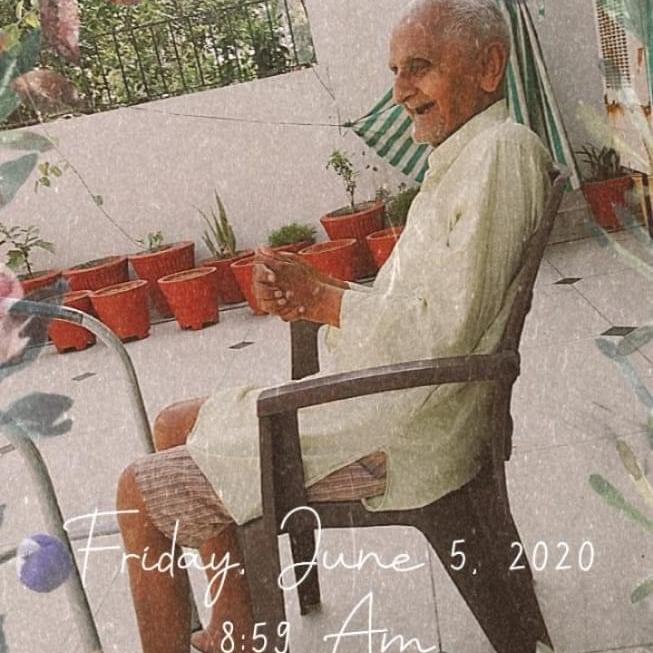
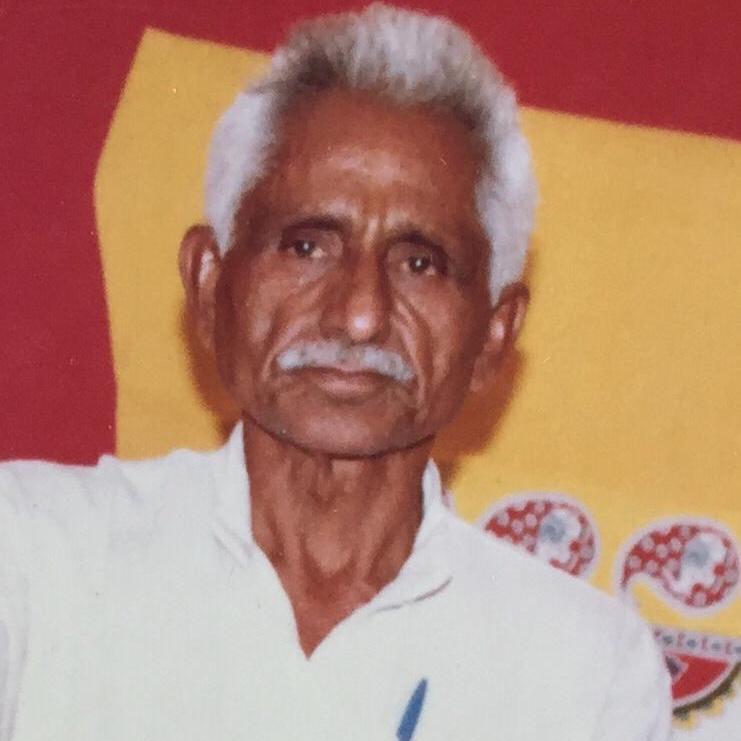
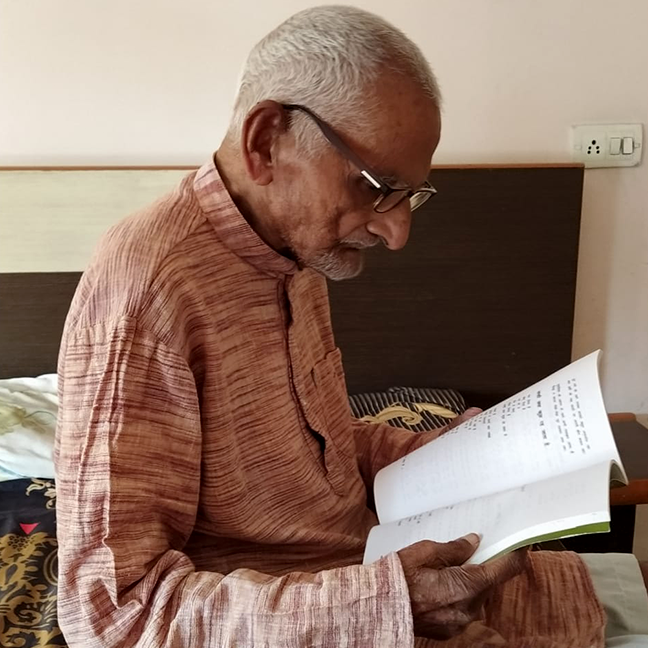
June 9 2021 was the remembrance day for the family; it is a month since comrade Sadanand passed away. There are more memories and details to share with all those who loved and admired him. The family has decided to set up "Sadanand Memorial Fund" to carry forward his legacy.
A FEW WORDS
ABOUT COMRADE SADANAND PUNIA
_BIRTH AND TIMES OF THE LEGEND
Comrade Sadanand was born into a family of freedom fighters on 05.07.1933 at village Kharak Punia, Punjab. He attended C.A.V. High School at Hisar where he passed his matriculation examination. Subsequently, he studied for his F.A. at Jat Senior Secondary School College Hisar. His father, Sh Diwan Singh was active in the freedom struggle in the 1930s, and was imprisoned by the British in Hisar and Ferozepur jails in 1940 during the disobedience movement; his mother passed away while he was still in his teens.

-Mahatma Gandhi
Post-World War two was the time when social and economic reconstruction was taking place at an unprecedented pace under the organised leadership of the Communist Party in Russia. Whilst in school his father would occasionally take him to the house of his friend and companion of the freedom struggle, Lala Balwant Rai Tayal. His residence presented a forum for political discussions for people of all ideological persuasions, and had a deep and lasting imprint on the formative years of young Sadanand. His father also introduced him to another figure of India’s freedom struggle, Dada Ganeshilal, who gave him lessons in the teachings of Gandhi and Vinoba Bhave.
He reminisced about all his friends whom he came to know during his long life. It is incredible that the friendships between him and all his friends with diverse political backgrounds lasted throughout his life in spite of their ideological differences. They would meet regularly in 'Jain tea-house' in Nagori Gate, Hisar to exchange their views on contemporary issues. It became popular as a 'teach-in tea-house' of Hisar. One day, when he was in his usual expansive mood, I inquired about why he had friends with different political backgrounds and he said, "One cannot choose one's friends only on the basis of ideological similarities and considerations."

-Rabindranath Tagore
When I asked him what made him like Marxian ideas, he replied, "I read on Bolshevik revolution in the first year of my college and was amazed to know the socio-economic transformation it brought about in the agrarian society of Russia. I could observe rampant poverty, inequality, illiteracy, exclusion, caste-oppression and class-exploitation all around me in Indian society. Marxian ideas started helping me better understand the nature of social relations and workings of various institutions in my own social environment. I felt as if they provided a transcendental vision to me to correctly understand all the problems people were facing in front of my own eyes." The Bolshevik revolution was a historic event of international significance which had an enormous impact on the consciousness of the youth and students of his generation including him.
He spent extensive periods of time learning alternative systems of medicine at Patiala and Nabha in the early fifties when he came in contact with communist pioneers of Punjab including Com Jagjit Singh Layallpuri, who encouraged him to join the Punjab Kisan Sabha in 1954. Subsequently, he joined the Communist Party of India. It was one of the pivotal moments of his life because he decided to abandon his plans of further education and instead dedicated his work to the peasantry of Punjab. His decision did not go well with the family members who wanted him to continue with his studies.
_RISE OF REVOLUTIONARY
Sadanand was enamoured by revolutionary thought. It was during the Kairon regime in Punjab when he first exhibited his revolutionary penchant, by actively participating in the anti-betterment levy agitation of 1959 along with his father Diwan Singh and Uncle Lahiri Singh, led by Com Harkishan Singh Surjeet and Com Jagjit Singh Layallpuri. His village Kharak Punia became the focal point of the agitation for the Hisar district. Consequently, he was arrested and sent to jail. Police oppression lasted for more than a month. It was precisely this movement which made communists an important political force in Punjab. Com Sadanand was one of the pioneers who laid the groundwork for the communist party in Hisar district. After the split in the communist movement in 1964, he sided with CPI (Marxist) and worked closely with Com Dharam Singh Kasni and Raghubir Singh Hooda.
In 1960s Sadanand wanted the school in his native village to be upgraded to senior secondary level. He met Sardar Pratap Singh Kairon and requested him to visit his village, Kharak Punia. Mr Kairon accepted his invitation. News of the imminent visit enraged local Congress MLAs and ministers, who urged Mr. Kairon to decline the invitation of a communist. Mr Kairon curtly rejected their concerns and came to Kharak Punia where he was welcomed by a huge crowd. Mr Kairon acceded to all demands related to development projects in the area put forth by Com Sadanand during his visit.
When the demand for a separate state of Haryana gained traction in early 1960s, he did not align himself with it. When some students including Prithvi Singh Gorakhpuria organised a sit-in protest in support of the movement, he regularly visited the protest site and advised the participants to concentrate their energies on more pressing pro-people agendas. He would give progressive literature to them. He was able to wean Prithvi Singh Gorakhpuria and his friends off the regressive agenda, and into the communist party.
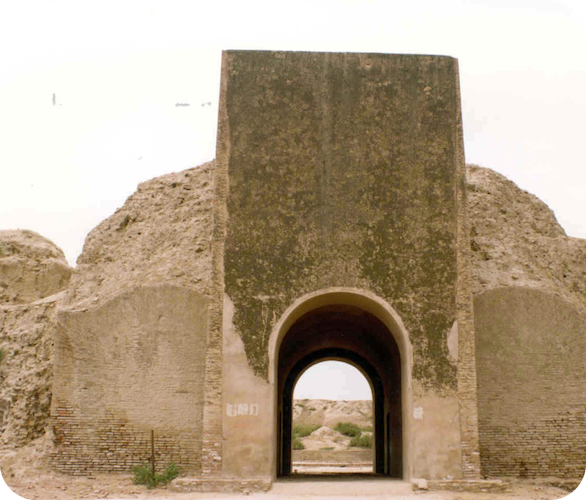
In the early 70s, he actively participated in the workers' struggle against the depressing working conditions at Hisar Textile Mills. Bansilal’s regime resorted to a brutal attack on the protesting workers. One worker died and several others were seriously injured in the police firing at Hisar. Subsequently, Sadanand was falsely implicated in several serious cases by the local police and had to go underground. Bansilal wanted to see him arrested and jailed at the earliest. Police raided his home frequently. They threatened his family members in attempts to extract information on his whereabouts; they prohibited any work on his fields; they even forcefully detained his father at the police station, where he was tortured and kept in illegal custody for days. Sadanand’s wife, Mrs Maan Kaur, often chased police from their home while wielding a laathi. The family’s ordeal ended after almost two years, when he was arrested and sent to jail.
_AT CRUCIAL TIMES OF EMERGENCY (1975)
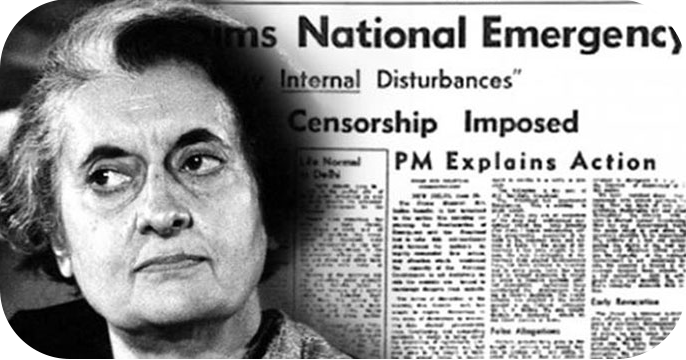
When Indira Gandhi declared national emergency in June 1975, trampling on the democratic rights and civil liberties of the people, he began distributing pamphlets and progressive literature amongst the masses, creating awareness against the authoritarian regime. Once again, police issued arrest warrants against him which again forced him underground. Eventually, he was arrested at Hansi and imprisoned in Hisar jail. He also remained an active participant in all important struggles of teachers, employees and students in Haryana.
“BLACKEST HOURS”
of Independent India
_PARTICIPATION IN GOVERNANCE
Ch. Devilal appointed him a member of the high-powered committee of the Haryana Government on irrigation in 1987, which he accepted as the committee deliberated on important issues related to irrigational projects for the agricultural sector of Haryana. Simultaneously, he was also appointed a director (non-executive) of Haryana Housing Board which he politely declined.
He made an abundance of progressive literature available to the left-leaning intellectuals and activists across Haryana. Hisar was teeming with well-read young activists by the end of seventies. His contribution to the left and democratic movement of Haryana will always be appreciated and remembered.